
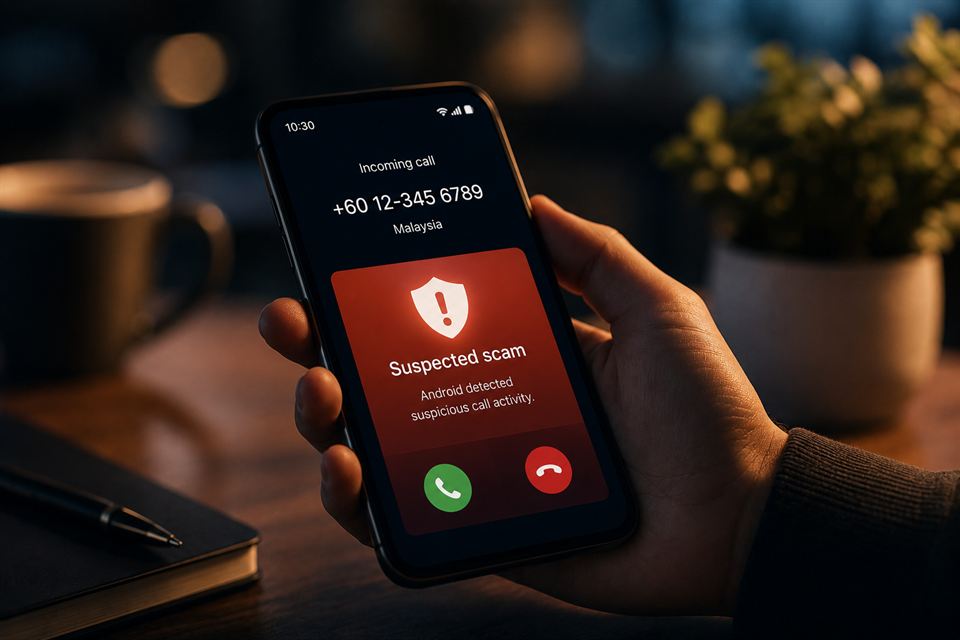
Android can now detect fake calls. But do not switch off your common sense.
Scam calls are not new.
In Malaysia, we already know the pattern.
Someone calls and says they are from the bank. Or police. Or courier company. Or government office.
Then suddenly there is "urgent case", "suspicious transaction", "parcel issue", or "your account will be blocked".
Last time, we could still agak-agak.
Unknown number? Do not answer.
But scammers are getting smarter now.
They do not only use random numbers anymore.
With spoofing and AI voice tools, a call can look familiar, or even sound like someone you know.
That is the scary part.
Because when the voice sounds real, people panic faster.
What Android is trying to do
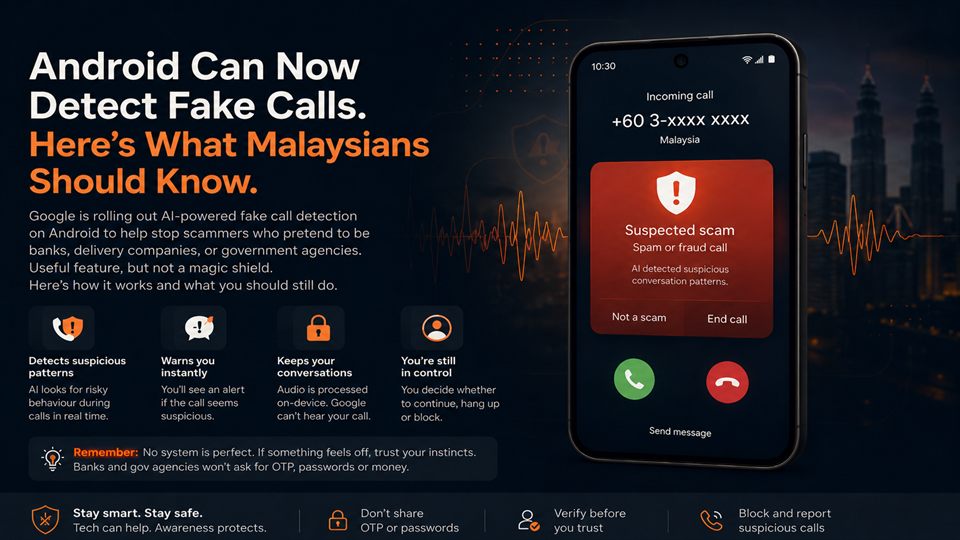
Google is rolling out a new fake call detection feature on Android to help detect suspected spoofed calls.
The idea is quite interesting.
When someone in your contacts calls you, Android can do a kind of silent digital handshake between devices to check whether the call is really coming from that person's phone.
If the system suspects that someone is pretending to call from your contact's number, it can show a warning on your screen.
In simple words, your phone tries to help you answer this question:
"Is this really the person calling, or someone pretending?"
That is useful, especially now that scammers can use AI voice cloning to make fake calls sound more convincing.
But this is not magic
This feature can help, but it will not stop every scam.
It depends on supported Android versions, Phone by Google, RCS capability, and whether both sides are using the right setup.
So not every call will be protected in the same way.
Also, scammers do not only use one method.
If call detection becomes harder, they may move to WhatsApp calls, Telegram, SMS, fake links, or social media messages.
So yes, the technology is good.
But do not treat it like a full shield.
Treat it like an extra warning light.
Why this matters for Malaysians
Most of us already receive suspicious calls.
Fake bank officer.
Fake delivery.
Fake LHDN.
Fake police.
Fake "your parcel has problem".
Sometimes they even know your name or basic details, which makes it feel more believable.
And when the call sounds urgent, people do not think clearly.
That is exactly what scammers want.
They want you to panic first and verify later.
So if Android can warn users before they continue the call, that is a good step.
It gives people a moment to pause.
And sometimes, that pause is enough to prevent a mistake.
What you should still do
Even with smart protection, keep a few simple rules.
If someone calls and asks for OTP, password, TAC, card number, banking login, or money transfer; stop.
Banks, government agencies, and delivery companies should not need your password or OTP over the phone.
If someone says it is urgent, do not rush.
End the call and contact the organisation through the official number from their website or app.
If the caller claims to be family or friend asking for money, verify another way.
Call them back using your saved contact.
Message someone close to them.
Ask a question only the real person would know.
And if the call feels wrong, trust that feeling.
Better to look rude than lose money.
For Android users
If your phone supports it, check whether you are using Phone by Google as your default phone app.
Also keep Google Messages updated and make sure RCS is enabled if available.
If the feature reaches your device, leave it on unless you have a strong reason to disable it.
Small protections like this are worth having.
Not because they are perfect.
Because scams only need one careless moment.
Final thought
Android fake call detection is a good move.
It shows that phone security is no longer just about blocking unknown numbers.
Now, phones need to detect impersonation, spoofing, and AI-powered scams too.
But the best protection is still a mix of tech and awareness.
Let the phone warn you.
But let your brain decide.
If something feels too urgent, too emotional, or too strange, pause first.
Because scammers do not win because they are always clever.
Sometimes they win because we react too fast.