
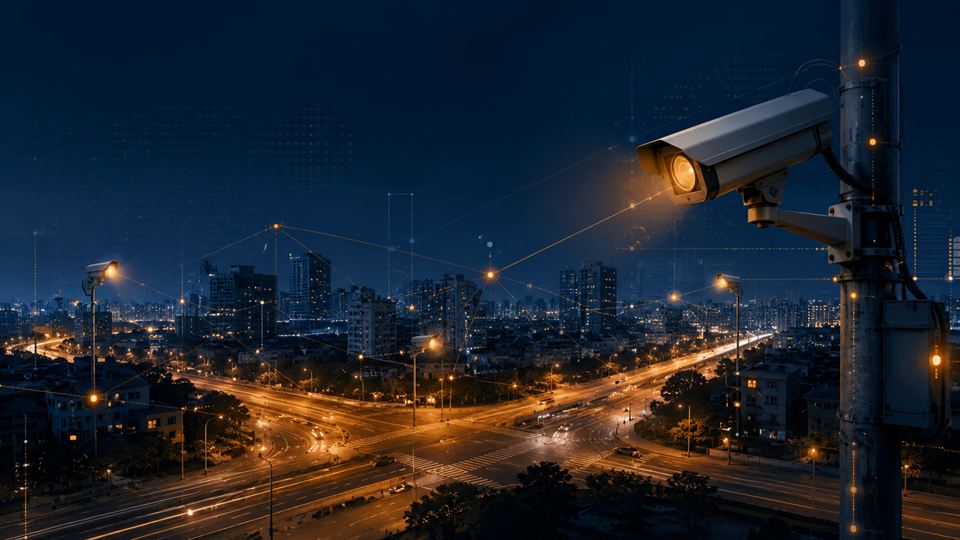
KL now has AI-powered CCTV. Useful, scary, or both?
Kuala Lumpur now has around 10,000 CCTV cameras installed across major roads, intersections, public areas, and commercial centres.
These cameras are not just recording video.
They are part of an AI-powered system that can detect incidents, analyse situations, and trigger real-time alerts for faster response.
In simple words, the city is becoming more watched, more connected, and more automated.
Whether that feels comforting or slightly creepy depends on how you look at it.
What the system is supposed to do
The main idea is safety and faster response.
If there is an accident, emergency, unexpected traffic jam, or possible flood risk, the system can help authorities detect it earlier instead of waiting for someone to report it.
For a city like KL, that makes sense.
Too many things happen at the same time. One stalled car, one accident, one flash flood, or one blocked road can turn into a bigger problem very quickly.
DBKL's Kuala Lumpur Command and Control Centre, or KLCCC, is positioned as the operational hub for Kuala Lumpur's smart city initiatives.
Its official portal says KLCCC manages traffic through CCTV monitoring and computerised traffic light control, while also supporting traffic announcements and emergency response.
But this is not just normal CCTV
The part that makes people pause is the AI layer.
Reports say the system includes facial recognition, geo-fencing, behaviour analytics, and an integrated public address system.
This means the system is not only watching what happens.
It can also analyse patterns, detect suspicious movement, track vehicles in certain areas, and send alerts to the command centre.
That sounds useful when it helps detect crime, manage crowd safety, or warn people during emergencies.
But at the same time, we cannot pretend this is a small thing.
Once a city starts using AI cameras at scale, people will naturally ask questions.
The real issue is not the camera
The real issue is governance.
AI CCTV is not automatically good or bad.
It depends on how it is used.
If the system helps reduce crime, detect emergencies, manage traffic, and respond to floods faster, then yes, that is useful.
But if the system is too vague, people will worry.
What counts as suspicious behaviour?
Who can access the data?
How long is it stored?
What happens if the system makes a mistake?
"Smart city" should not mean "just trust the system".
It should mean better safety, faster response, clearer rules, and proper accountability.
Why ordinary people should care
Some people may say:
"If I did nothing wrong, why worry?"
Fair.
But privacy is not only about hiding something wrong.
It is also about knowing how public systems collect and use our data.
A safer city is good, but people should still understand what the system sees, who controls it, and what protection exists.
For Malaysians, this is probably the future we are heading into.
More cameras, more sensors, more data, more AI in public services.
The question is not whether technology will enter the city.
It already has.
The better question is whether the public will be informed clearly enough.
Final thought
KL having AI CCTV can be a good thing.
It can make the city safer, help authorities respond faster, and support better traffic and emergency management.
But powerful technology needs clear explanation.
Not just "do not worry".
Tell people how it works.
Tell people what it sees.
Tell people who can access the data.
Tell people what happens when something goes wrong.
That is how smart city technology becomes useful without feeling creepy.
Sources
[1] The Star, 10,000 CCTV cameras with enhanced tech installed in KL
[2] KLCCC Official Portal, Kuala Lumpur Command & Control Centre
[3] KLCCC, About Us
[4] Malay Mail, KLCC gets tighter security as DBKL, police deploy smart cameras and panic buttons